Belarus will hold investment mini-forums in London and New York this autumn. On the threshold of these events, the freelance journalist of “fDi Magazine” Andrew Wrobel visits our country on invitation of the National Agency of Investment and Privatization.
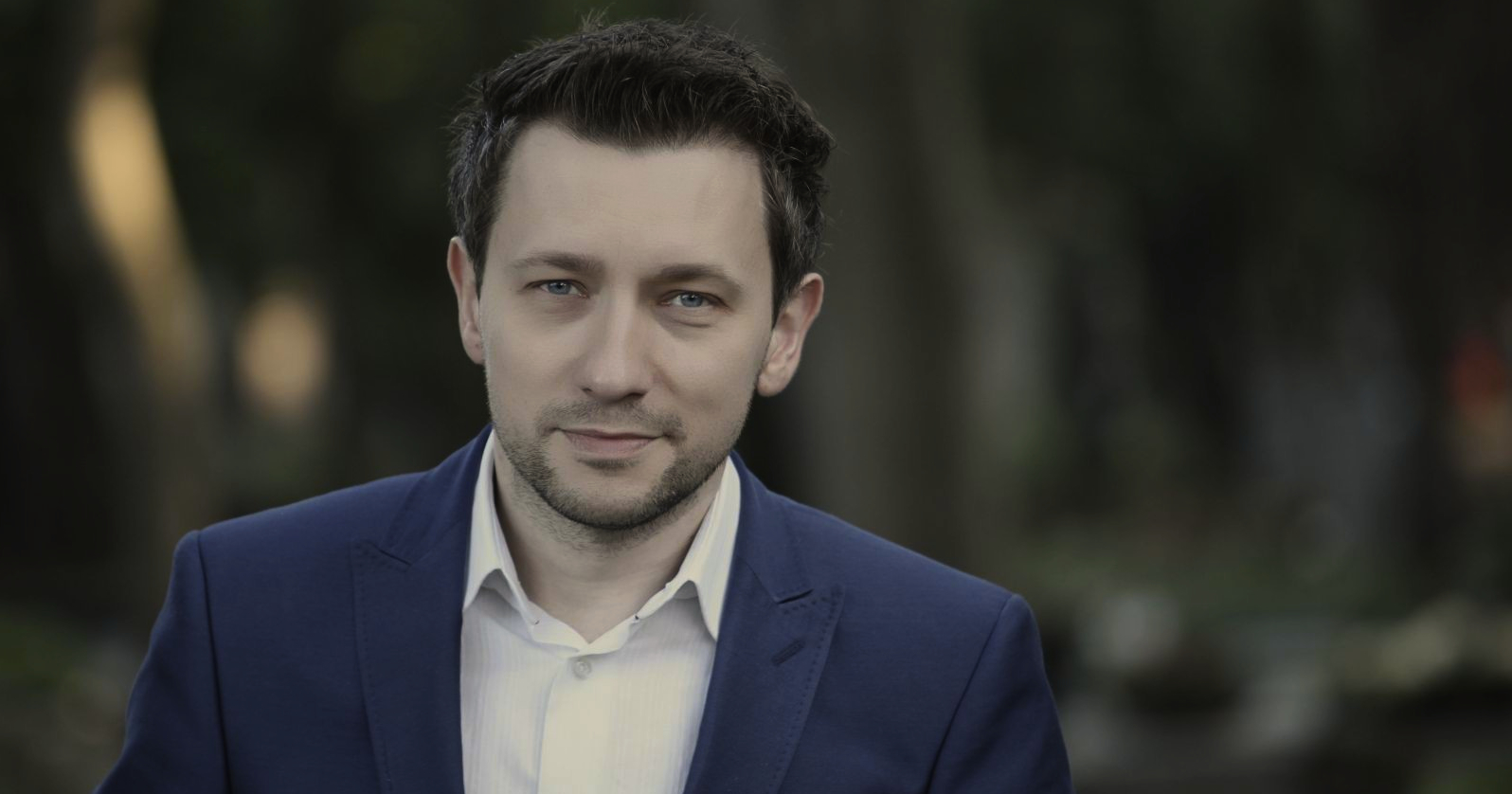
photo by Krzysztof Tadej
I came to Minsk for three days and my task was to collect as much information as possible about the country’s economy, investment and privatisation opportunities so I could write a special supplement about Belarus within fDi Magazine, a bimonthly Financial Times publication about foreign direct investment. The report will come out at the end of August and will also be distributed with the next issue of fDi Magazine.
What did the cost of the special issue of FDI Magazine run out at for Belarus?
I was responsible only for the information, for the content. Your question lies within the competence of other departments of “The Financial Times”. (According to the National Investment and Privatization Agency, the issue was developed at the expense of a strategic partner of the investment forums — the Development Bank. — TUT.BY).
What high-ranking officials did you meet? Who of them impressed you most?
Quite a few of them, actually. I met with the Minister of Economy, Mr Nikolai Snopkov, the Deputy Foreign Minister, Mr Aleksandr Guryanov, Mr Kiryl Rudy, the Economic Advisor to the President, and Ms Natallia Nikandrava, the Director of the National Agency of Investment and Privatisation. It was very interesting to talk to them and learn a lot about how they see Belarus. You see, if I followed the stereotypes I would expect all of them to be some ex-communist figures, reserved and hard to talk to. Instead, they were all very open for discussion, sometimes even joking like Mr Snopkov when he said he liked my American accent.
What companies, factories and plants did you visit? What's your opinion about them?
Again, quite a few of them. I went to Alutech, Belaz, Stadler, Wargaming.net and the High Technologies Park, talked to people from Kapsch, Development Bank, EY, Softeq. I was impressed in all these cases. It was very interesting to hear how Alutech is conquering Western markets with their products, how many subscribers the War of Tanks has, how fast Stadler is developing, that Kapsch managed to work on the first-ever public-private partnership (PPP) project in Belarus and how Belaz successfully competes on foreign markets with American, Japanese and German companies. I think it is important for Belarus to promote these companies and their expertise abroad.
So far our country has not been recognised as an investment attractive space. What, in your view, can be done to improve the reputation of the country?
I don’t think that it is fair to say that the country has not been recognized as an attractive business destination for foreign companies. This year, for example, Gartner, an American information technology research and advisory firm, included Belarus in their Top 30 Leading Locations for Offshore Services. The World Bank’s Doing Business Report put Belarus on the 63th place, ahead of Greece and the Czech Republic, which means it is easier to do business in Belarus than in these two countries even though both are members of the European Union. Isn’t that a success? I think it is. It’s not that you’re trying to come up with reasons to convince investors. Those reasons are already there.
Would you say that foreign businesses should take risks and invest in Belarus?
I think that when you do business you always need to take risks regardless of where you do that. You always need to remember what your goals are and see if your investment makes sense. From what I can see there is a great number of reasons why companies might be interest in Belarus. A lot of firms are looking to the Russian market, especially now with the EU-US and Russian sanctions. Belarus can not only be a gateway for those who want to operate there but also for those who want to export there. I have to say that the Belorussian companies I spoke with confirmed that.
Talking about Belarus, was it your first visit to our country? What's your personal opinion about it?
Yes, it was my first visit to Belarus. I love travelling and I had always wanted to come here and I am glad I did. It is very irritating and unfair that some people still believe in stereotypes and that they spread them is even worse.
I remember travelling by train in Morocco and I wasn’t sure which station to get off at in Casablanca so I asked a young guy if he could tell me. We then started chatting and he asked me how I enjoyed Morocco so I told him about my experiences: some nice ones and some not so good ones, and he said: “That cab driver wanted to charge you five times more than he should so you must hate Morocco.” And I said: “No! Of course not!” It wouldn’t be wise of me to form an opinion based on one single situation. And I still like Morocco.
Recently, someone asked me about my most favourite and the most terrible place I had visited. I was able to list a few favourites but struggled to name one place that I really didn’t like. That is because I always try to have an open mind when I go to new places and base my opinion about them on my own experience. And in Belarus I only had good experiences.
A pleasant surprise was to see that Minsk feels and looks like many Central European cities — depending on the area of the city I was in I felt I could have been in the Czech Republic, Poland or Germany. Not in the UK though, as you drive on the right!
And if you look at Minsk or outside the city I don’t think you could say you are not in the Czech Republic, Poland or Germany. It couldn’t be the UK because you drive on the right.
Belarus is known for its traditional potato cuisine, wide streets and beautiful girls. Did you have a chance to notice any of that?
Yes, I forgot to mention the food. I visited a few very nice places like Grand Cafe and Falcone. But this was more fusion food. I enjoyed my coffee at News Cafe and I also went to Vasilki, which is typically Belorussian. Oh, and I loved potato pancakes. I tried a few kinds, both sweet and sour. The waitress was quite surprised when I had placed the order.
You also asked me about wide streets. I think it is more typical of Eastern Europe. You see them not only in Minsk, Moscow but also in Warsaw. I find them more practical. It is a nuisance to drive in London as the streets are very narrow and takes you ages to get from one place to another.
And of course I noticed the beautiful girls. One of them even helped me get a cab when I was on my way back to the hotel and was struggling to order one from my non-Belorussian phone. What I really like about women from Eastern Europe is that they’re always glamorous, no matter what they do. Even in my hotel, there was a very pretty chambermaid. Of course, first I had no idea she was a chambermaid until I saw her wearing her uniform. Before she changed she looked as if she was going to an afternoon tea with the Queen. That was absolutely fantastic!